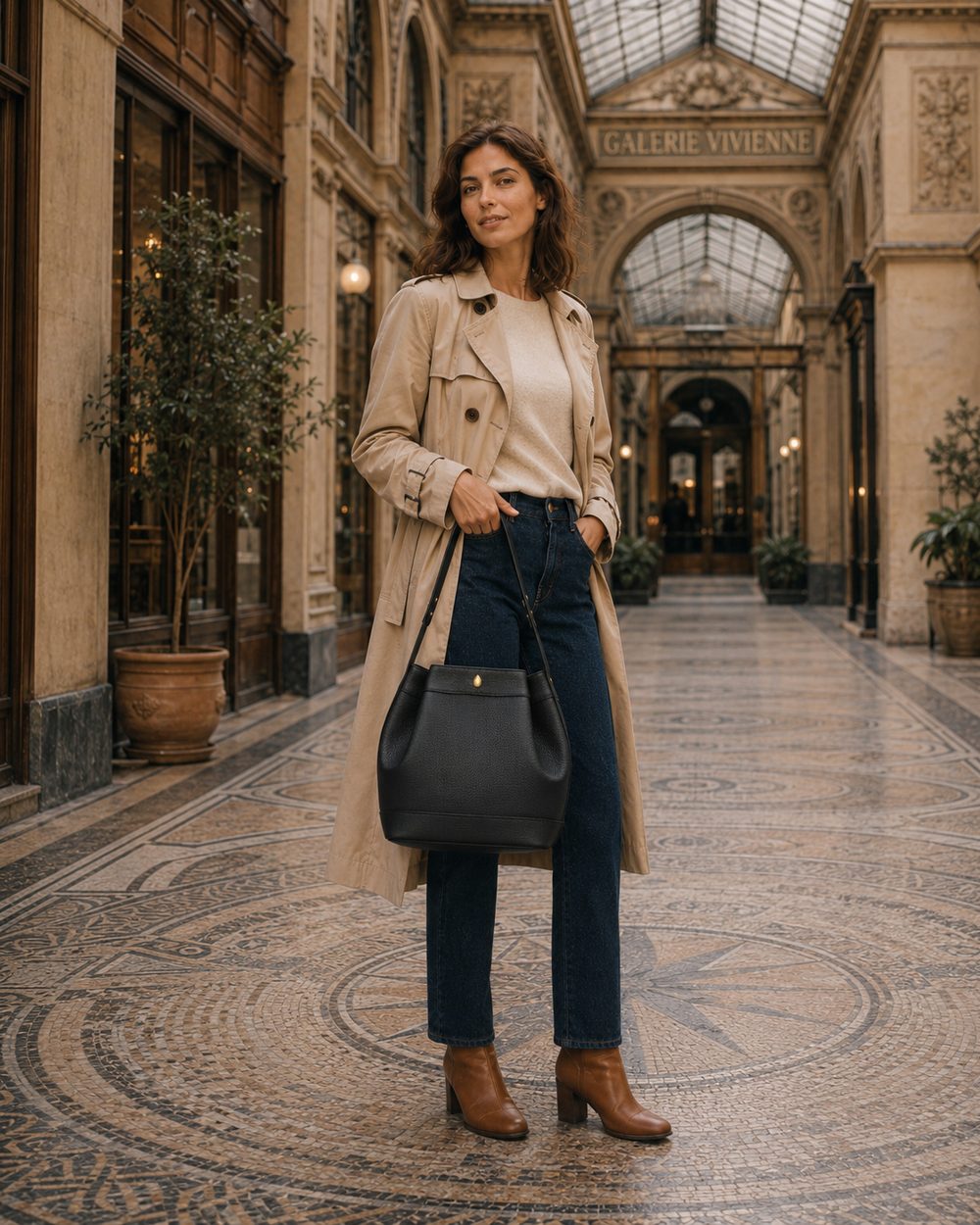
The Structured Bag — Why Shape Is the First Sign of Quality
Pick up a well-made leather bag. Before you look at the hardware, before you smell the leather, before you check the stitching — notice whether it holds its shape in your hand. Whether it stands on its own. Whether it looks, from across the room, like something that was designed rather than assembled.
Structure is the first sign of quality. And it is the first thing to go when corners are cut.
What structure actually means
A structured bag is not simply a rigid one. Rigidity without flexibility cracks. True structure is the result of a considered internal architecture — the way the leather is cut and assembled, the quality of the lining, the placement and weight of the hardware, the tension of the stitching at every stress point.
A well-structured bag holds its shape whether it is empty or full, carried or resting, new or ten years old. It does not sag at the base, buckle at the sides, or lose its proportions under the weight of daily use. It looks, always, like itself.
Why structure is the enemy of cost-cutting
Structure requires material and time. The internal components — the base plate, the frame, the interfacing between the outer leather and the lining — add cost at every stage. They are invisible to the buyer at the point of purchase. They are entirely visible after six months of daily use, when the bag that lacked them has begun to lose its shape and the one that had them looks exactly as it did on day one.
"A bag that holds its shape after a decade of use was structured correctly from the beginning. There is no other explanation."
The relationship between structure and silhouette
Structure is what allows a silhouette to remain legible over time. The flap bag, the bucket bag, the tote — each has a defining shape that only remains defining if the bag is built to maintain it. A flap bag that loses its flatness becomes a shapeless pouch. A bucket bag that collapses at the sides loses the clean cylinder that made it elegant.

At Menière Paris, every bag is built around an internal architecture designed to maintain its silhouette for the life of the leather. The base is reinforced. The sides are cut to hold tension. The hardware is positioned to distribute weight without distorting the shape. None of this is visible. All of it is felt, every time you pick the bag up.
Structure and patina — two sides of the same standard
A well-structured bag and a bag that develops a beautiful patina are almost always the same bag. Both require full-grain leather. Both require careful construction. Both improve with age rather than deteriorating.
The bag that sags after six months will not develop a beautiful patina. The bag that holds its shape after ten years almost certainly will. Structure and patina are not separate qualities — they are two expressions of the same underlying commitment to making something that lasts.