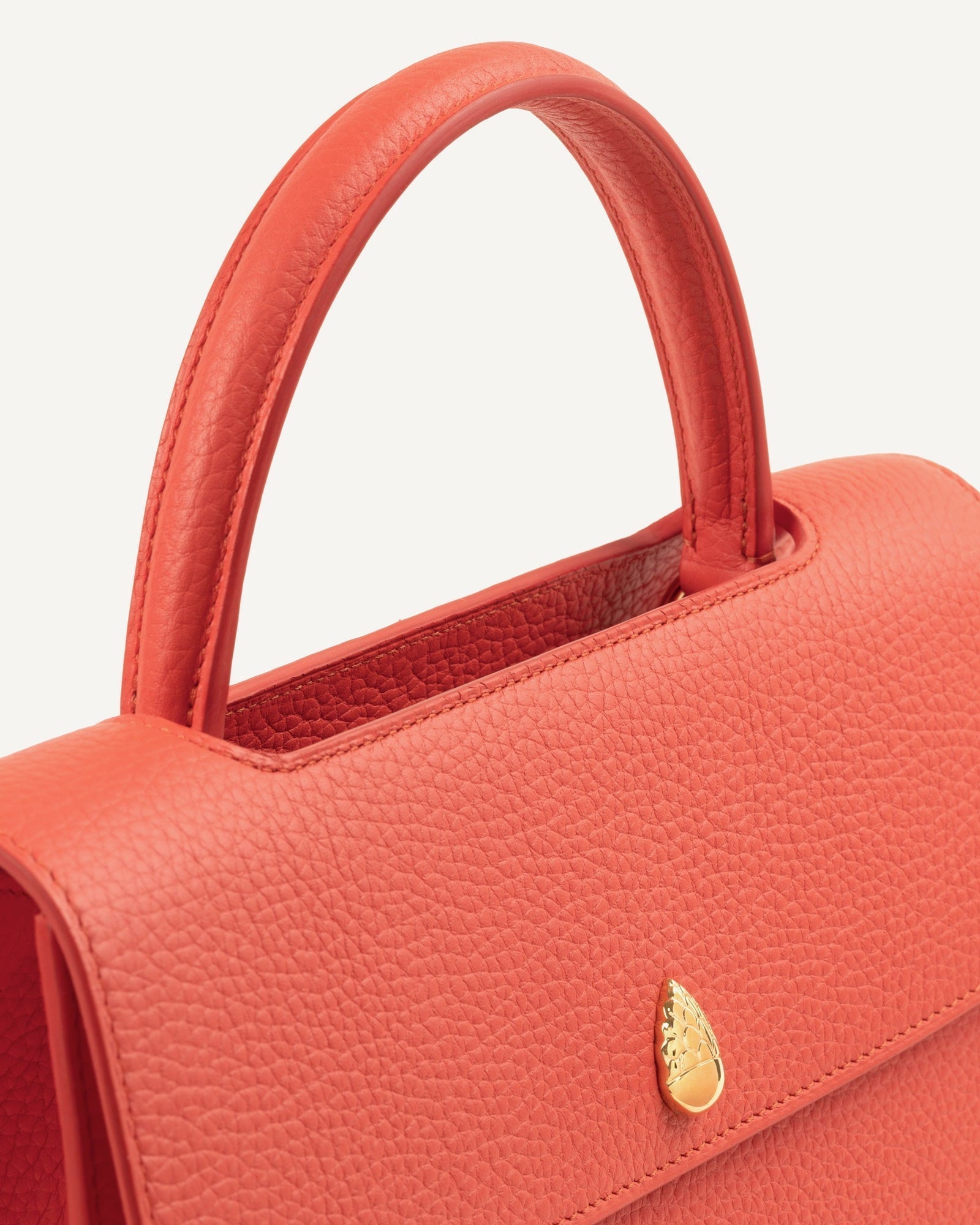
Why Brass Hardware Matters — The Detail That Defines a Quality Bag
The hardware on a leather bag is touched thousands of times over its life. It is the point of most mechanical stress, the place most visible to others, and the first component to reveal the true level of investment that went into making the bag.
Most people notice the leather first. Experts check the hardware first. Because hardware does not lie.
What solid brass actually means
Solid brass is an alloy of copper and zinc — heavy, corrosion-resistant, and eminently machinable into precise forms. It is the material used in quality hardware for centuries precisely because it performs well and ages beautifully.
The alternative — zinc alloy, often sold as "antique gold" or simply "metal" in product descriptions — is significantly lighter, cheaper to cast, and prone to tarnishing, pitting, and greenish oxidation within a few years. It also tends to fail at the stress points — the D-ring, the hinge of a clasp — long before the leather does.
Solid brass, gold-plated
— Heavy and precise in hand
— Resists tarnish and corrosion
— Develops a warm, even patina
— Fails after decades, not years
— Can be re-plated by a specialist
Zinc alloy, plated
— Light, sometimes hollow
— Tarnishes unevenly within 1–3 years
— Develops greenish oxidation
— Stress points fail before the leather
— Cannot be repaired once corroded
"Pick up the clasp. If it feels lighter than it looks, put the bag down."
The pine cone hallmark — 250 years in the making
The hardware at the centre of every Menière Paris bag carries particular weight — literally and historically. The pine cone hallmark was first registered by the goldsmith Paul-Nicolas Menière in Paris in 1775. It appeared on jewels created for Marie-Antoinette and on the coronation crown of King Charles X.
Today it is cast in solid brass and gold-plated, and it serves as both the functional clasp of the flap and the mark that identifies every piece we make. It is engineered to open and close ten thousand times with the same precise click it has on day one.

How to test hardware quality before you buy
Hold the clasp in your palm and feel its weight relative to its size. Quality hardware is always heavier than it appears. Open and close it five times in quick succession — the mechanism should engage without hesitation. Check the D-ring attachment: pull gently and confirm there is no flex. Look at the finish under natural light — quality plating is even, warm, and slightly reflective without being brash.
Once you feel the weight of solid brass against zinc alloy, you cannot un-feel it.
The hardware and the leather — one standard
The hardware on a quality bag and the leather it closes are held to exactly the same standard: both must perform flawlessly after years of daily use, and both must age in a way that improves rather than degrades the bag. Solid brass develops a warm patina that complements the leather beneath it. Zinc alloy corrodes in a way that makes the leather look worse by association.
They are chosen together, or they are chosen wrong.