The Art of Patina — Why Full-Grain Leather Gets Better With Age

Most things we own diminish over time. A truly well-made leather bag does the opposite. It deepens, enriches, and becomes more itself — more yours — with every passing year.
There is a word for this transformation. Patina. In French craft tradition, it is not a flaw to be corrected but a quality to be cultivated — the visible record of a life lived with beautiful things.
Understanding patina is understanding why full-grain leather is in a category of its own. And understanding that changes the way you think about buying a bag.
What patina actually is
Patina is the gradual change in a leather's surface caused by use, light, and the natural oils from your hands. Over time, the surface deepens slightly at the edges and high-contact areas — the handle, the clasp, the corners. The leather becomes suppler. It develops a depth and warmth that no new bag can replicate.
This only happens with full-grain leather. Lower-grade leathers — top-grain, corrected-grain, bonded — have been sanded and coated to remove imperfections. That coating also removes the leather's ability to breathe, absorb, and change. What you see on day one is what you will see in ten years, minus the wear.
"With full-grain leather, every crease is a memory, every darkened edge a chapter. The bag becomes a biography."
Why the grain matters so much
Full-grain leather comes from the outermost layer of the hide — the tightest, most densely packed part of the fibre structure. This is why it is the strongest leather available. The fibres interlock in a way that resists stretching, moisture, and abrasion far better than anything below it.
But strength is only part of the story. It is this same tight grain that allows the leather to take a patina so beautifully. The natural oils from your skin penetrate the surface and nourish it from within, producing a glow that looks like it came from the inside out — because it did.
What to expect from your Menière Paris bag
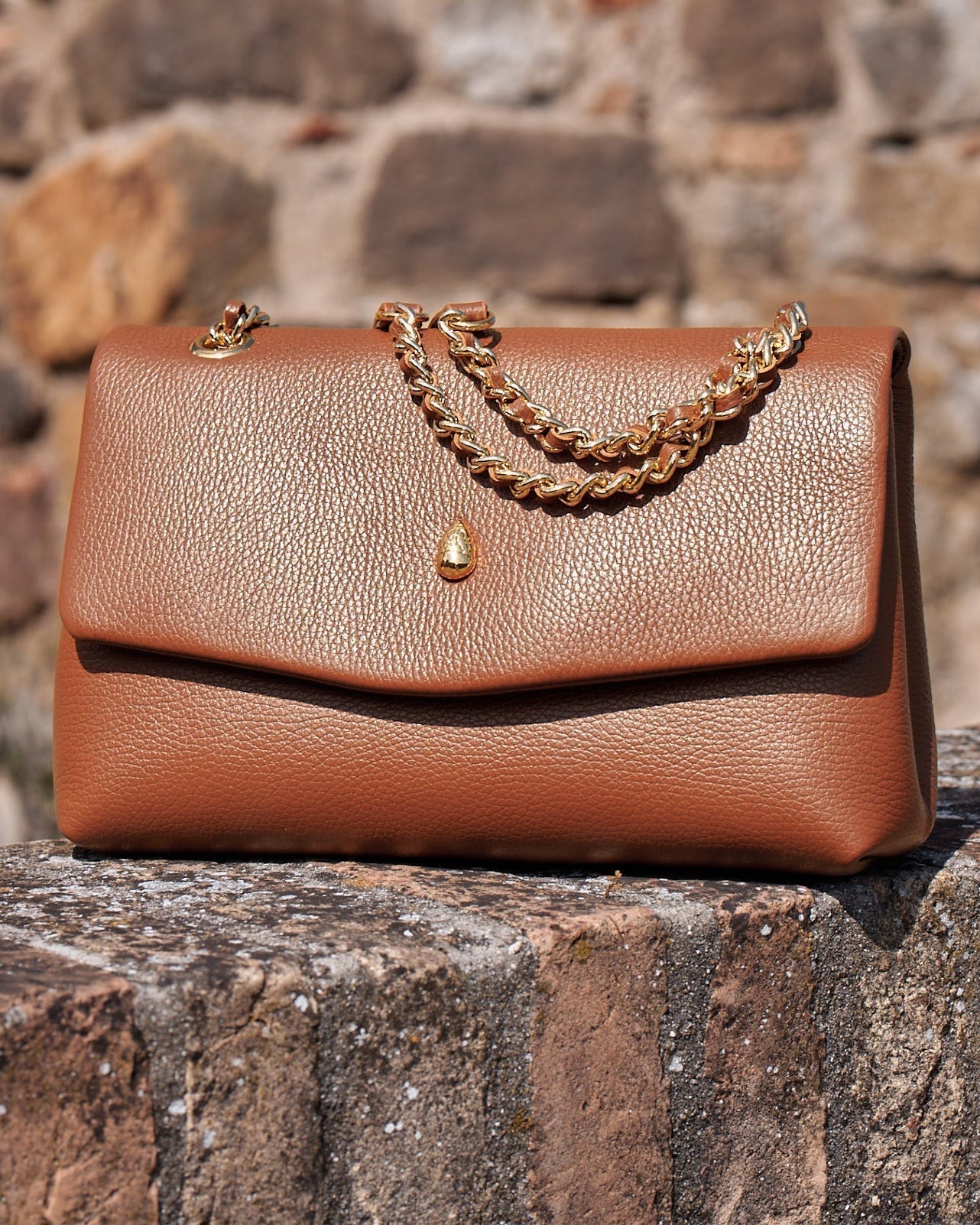
Every Menière Paris bag is made from full-grain French leather, selected for its texture, consistency, and patina potential. In the first weeks of use, you will notice the leather is firm and precise. Over the following months, the areas you touch most begin to warm in colour. By the end of the first year, you are carrying something no boutique can sell you — a bag that has taken on your light, your habits, your life.
Timeline : first patina visible at 3–6 months of regular use
What changes : colour depth, surface suppleness, edge darkening
What accelerates it : natural hand contact, sunlight, regular use
How to care for it : leather balm every 3 months — no more
How to encourage patina, not damage
Patina is the product of natural use — not neglect. Use your bag regularly. Apply a small amount of uncoloured leather balm every two to three months. Avoid wetting the leather heavily, storing it in plastic, or overcleaning — the natural oils from your hands are part of what creates the patina.
The investment case
A bag that improves with age is, by definition, a better investment than one that deteriorates. When you choose a Menière Paris bag, you are not buying a finished object. You are beginning a process — one that will continue, quietly and beautifully, for the rest of your life.