Paris in a Bag — How French Women Choose Their Everyday Leather

There is no secret to Parisian style. There is only the discipline to choose well, once, and to stop looking after that.
Ask a French woman how many bags she owns. The answer is usually fewer than you expect. Not because she cannot afford more, but because she has understood something the rest of the world is still learning: the best wardrobe is not the largest one.
The French woman does not follow trends
This is not a cliché — it is a practical philosophy. Trends are, by definition, temporary. The French woman knows this and simply opts out of the cycle entirely. What she looks for instead is permanence. A silhouette that would have looked right twenty years ago and will look right in twenty years more. A leather that deepens rather than deteriorates. Hardware that suggests quality without announcing it.
"She does not buy a bag for the season. She buys it for the decade."
The five principles she applies
1. She buys for her life, not her wishful life.
The bag must work for how she actually moves through the day — from morning meeting to evening dinner, from the métro to the country weekend. If it requires a change of bag for each context, it is not the right bag.
2. She prioritises leather above all else.
Before silhouette, before colour, before price: the leather. Full-grain only. She knows that a cheaper leather will show its quality within a year, and that quality leather announces itself quietly, over time.
3. She chooses a colour that does everything.
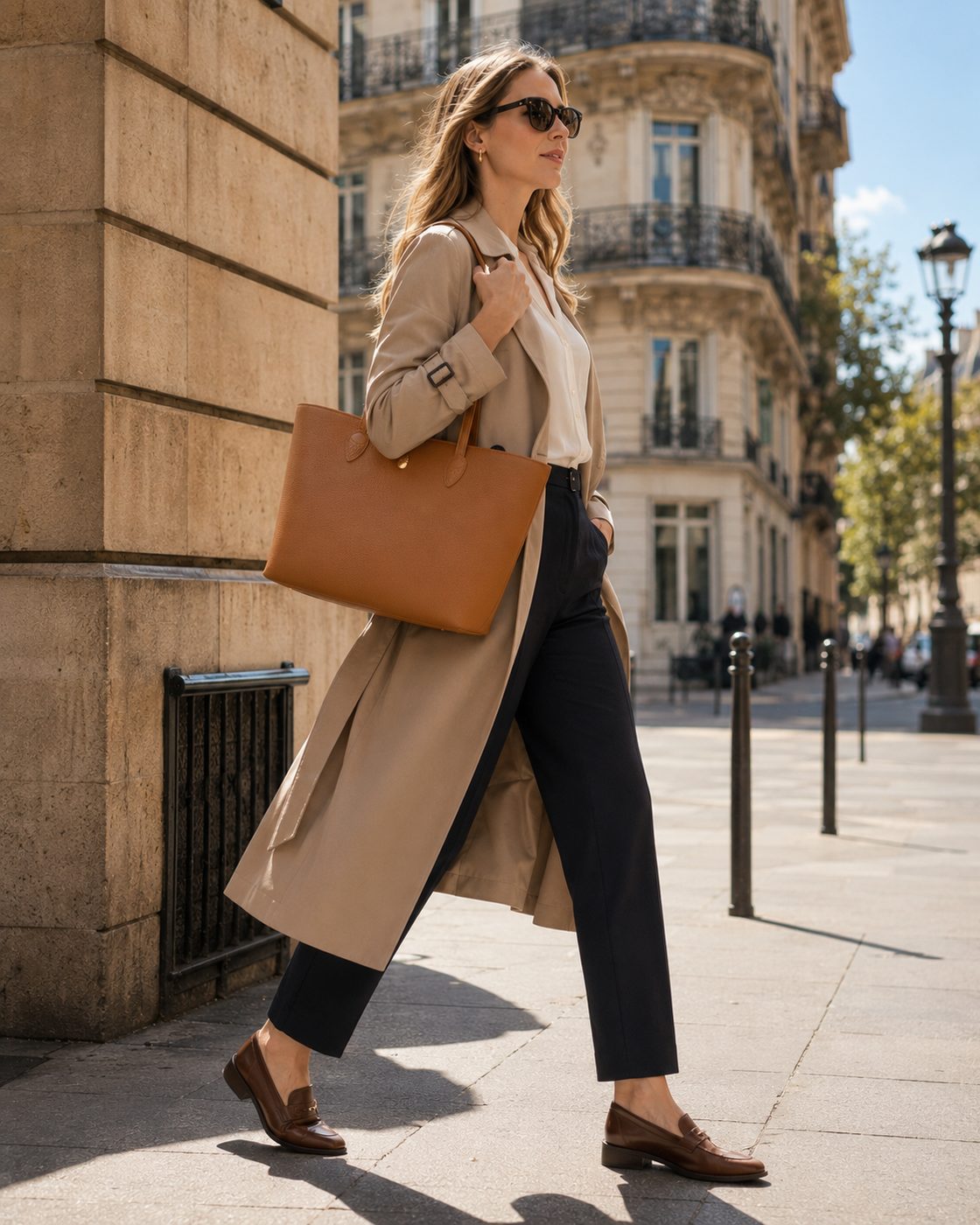
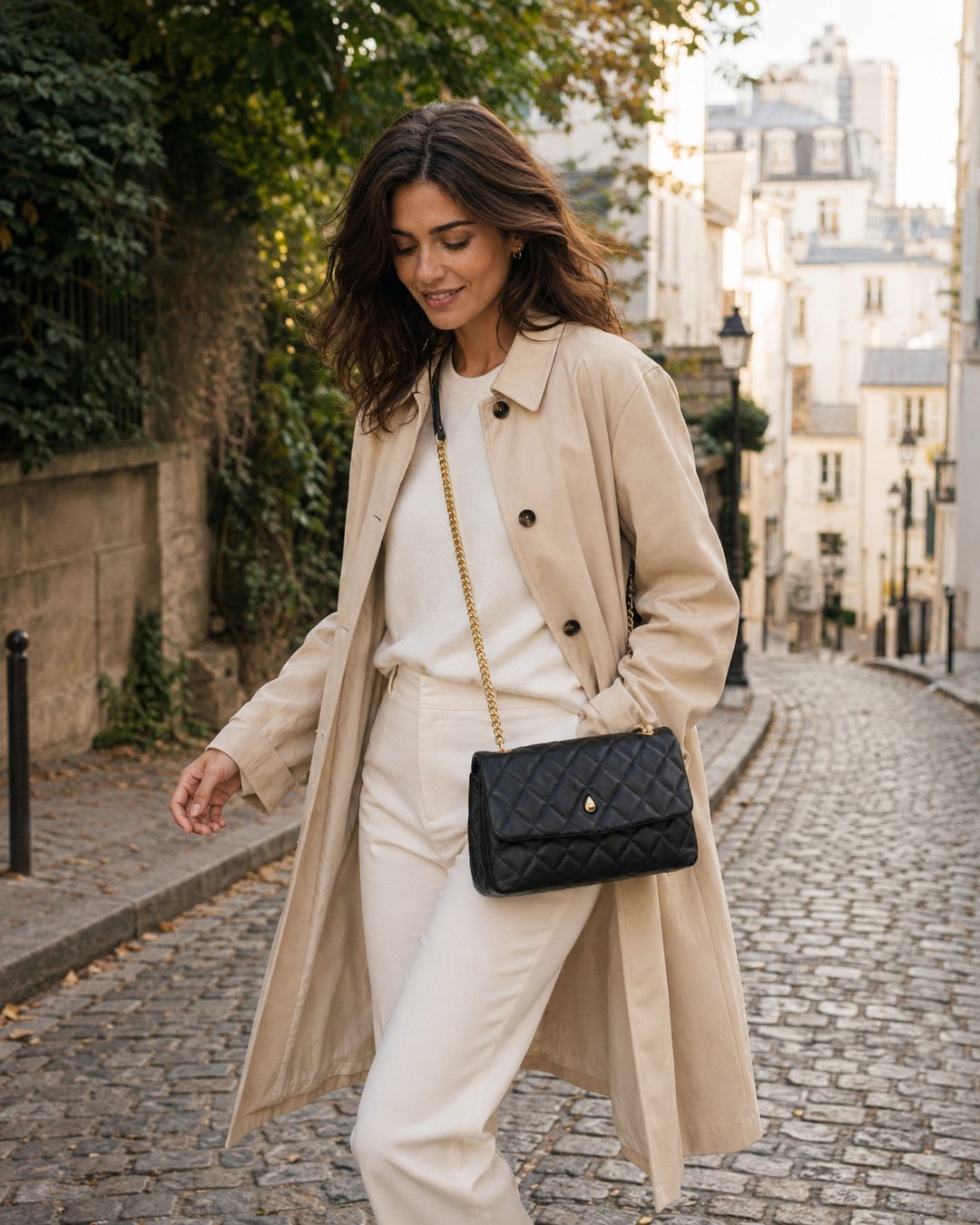
Cognac. Black. Camel. These are colours that disappear into an outfit in the best possible way — they complement without competing.
4. She values hardware that functions.
A clasp that opens and closes thousands of times without failing. Function is the quiet proof of craft.
5. She accepts no logo as a substitute for quality.
The presence of a monogram is, for her, a warning sign. It suggests the brand knows the bag needs identification because the leather cannot speak for itself.
The question she asks in the shop
Before any purchase, a single question: Will I still want to carry this in ten years?
It is a ruthless filter. It eliminates the seasonal shape, the novelty hardware, the trendy colour, the logo as centrepiece. What remains is almost always a structured silhouette in a neutral leather with discreet but considered detail.
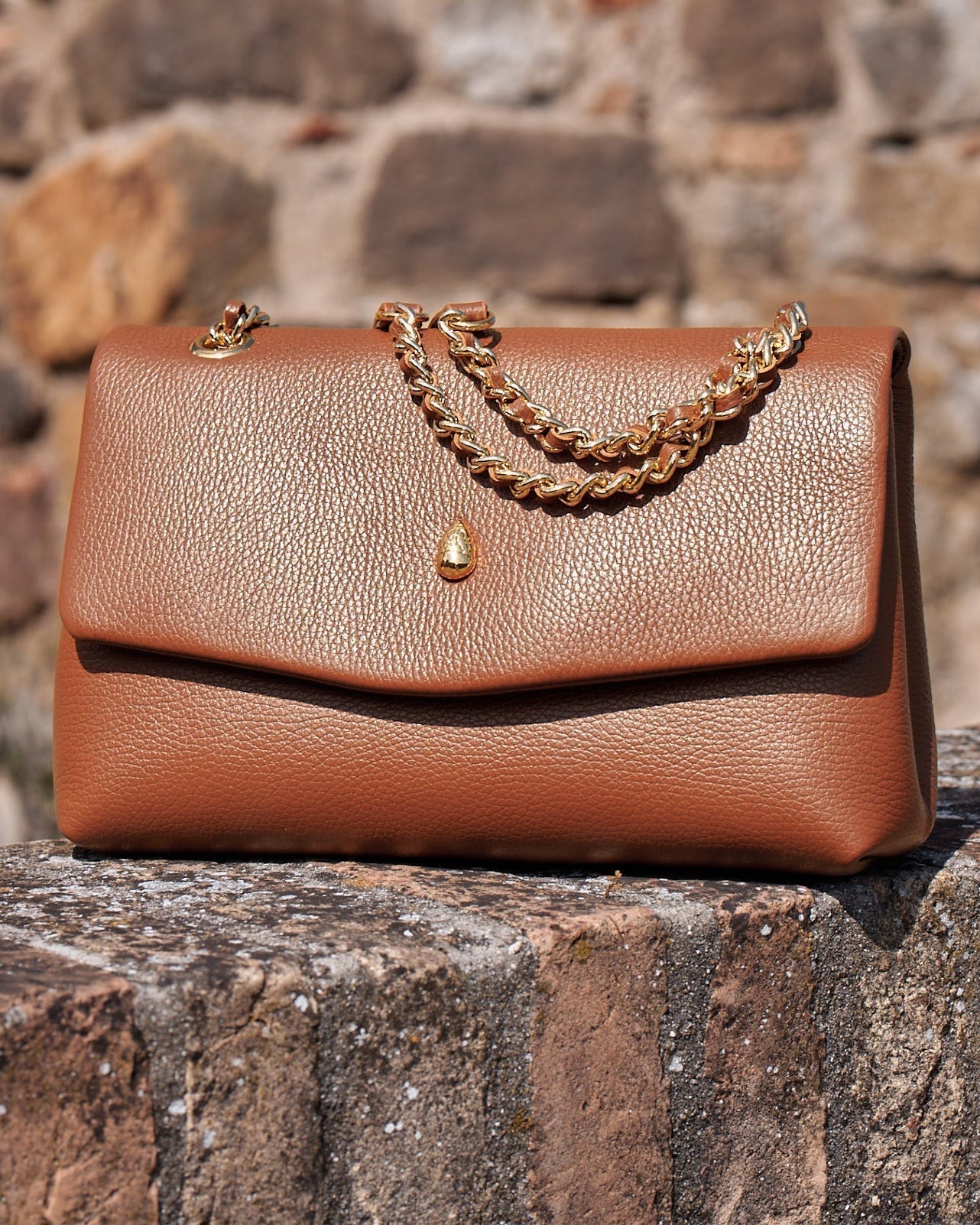
At Menière Paris, that detail is the pine cone hallmark — a mark first registered by the goldsmith Paul-Nicolas Menière in 1775, cast today in solid brass and gold-plated. It does not shout. It does not need to.
Why this approach is actually more affordable
A single bag purchased well and carried for fifteen years is dramatically cheaper than three or four mediocre bags replaced every few years. The cost per wear of an exceptional bag converges toward zero. This is why French women do not consider a well-made leather bag an indulgence. They consider it the most sensible purchase in their wardrobe.